
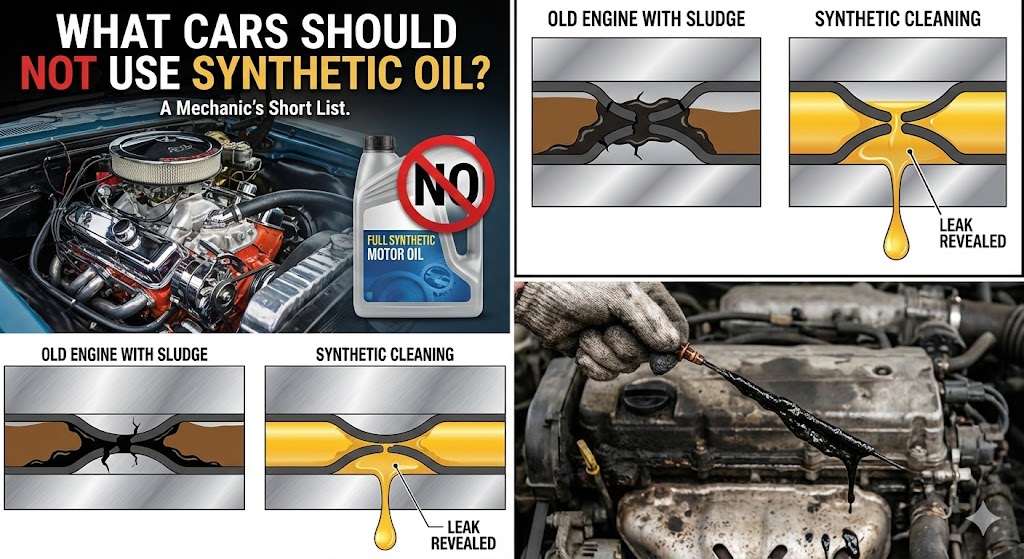
If you’ve read my other articles, you know I’m usually pounding the table for synthetic oil. In 2026, for almost every vehicle rolling into my shop, synthetic is the only responsible choice.
But every now and then, an old-timer pulls up in a beautiful ’69 Camaro, or a kid brings in a beat-up, high-mileage beater that hasn’t had an oil change since the Biden administration. They ask: “Dave, should I put that expensive synthetic stuff in her?”
My answer: Absolutely not.
While synthetic oil is “liquid engineering” for modern engines, it can actually be detrimental to a very specific, short list of vehicles. It’s not that the oil is bad; it’s just too good at cleaning for engines that rely on dirt to stay sealed.
Here is the honest truth about the few cars that should stick to the old-school stuff.
1. The “Synthetic Causes Leaks” Myth (Explained)
Let’s address the biggest fear first. You’ve heard it from your uncle: “Don’t switch to synthetic on an old car; it’ll start leaking like a sieve.”
He’s half right, but for the wrong reason.
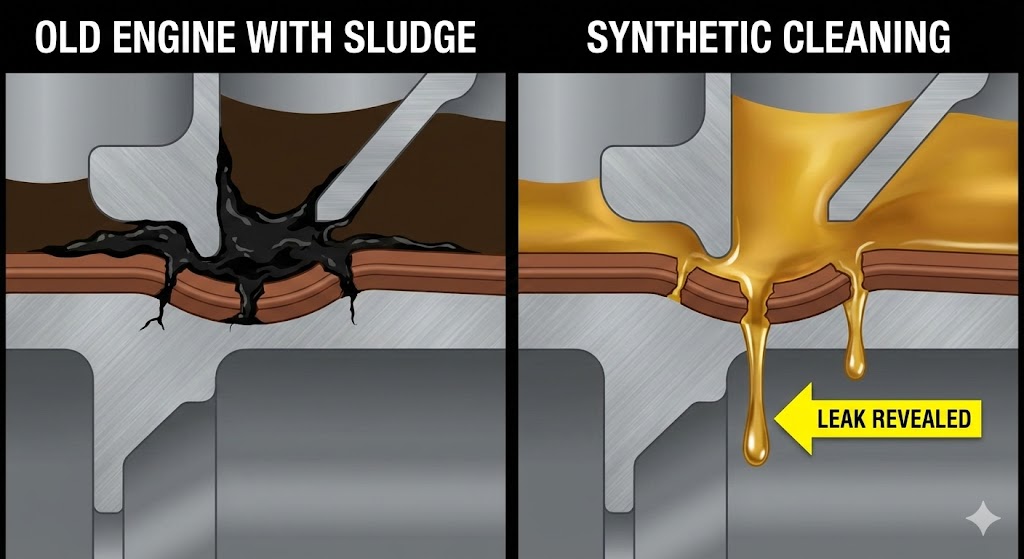
Synthetic oil in 2026 does not shrink seals or gaskets. However, synthetic oil contains powerful detergents. It is fantastic at cleaning out engine sludge.
On an old, neglected engine, thick sludge might actually be the only thing plugging up dried-out gaskets. When you pour in high-detergent synthetic, it dissolves that “load-bearing sludge.” Suddenly, gaps are exposed, and oil starts dripping on your driveway.
The truth: Synthetic didn’t cause the leak; it revealed a leak that was already there, hidden by dirt.
2. The No-Go List: Vintage & Classic Cars (Pre-1980s)
If you are driving a classic muscle car or antique truck with its original engine, keep modern synthetic away from it.
The Problem: Flat-Tappet Camshafts & Zinc Older engines (generally pre-mid-1980s) use “flat-tappet” camshafts. These designs create immense friction and require a sacrificial layer of protection to prevent the metal from eating itself.
Back in the day, oil had high levels of Zinc (ZDDP) to provide this protection. Modern synthetic oils (like today’s API SP spec) have greatly reduced zinc levels because zinc damages modern catalytic converters.
If you put modern, low-zinc synthetic in a vintage V8, you can wipe out a camshaft lobe in a matter of miles.
The Solution: Use a high-quality conventional oil specifically formulated for classics (like Lucas Hot Rod Oil or Valvoline VR1) that has high ZDDP additives.
WATCH: Why Classic Engines Need ZINC, Not Synthetic
See exactly what happens inside a vintage engine when you use modern, low-zinc oil. It’s not pretty.
3. The “Sludge Buckets” (High Mileage + Neglect)
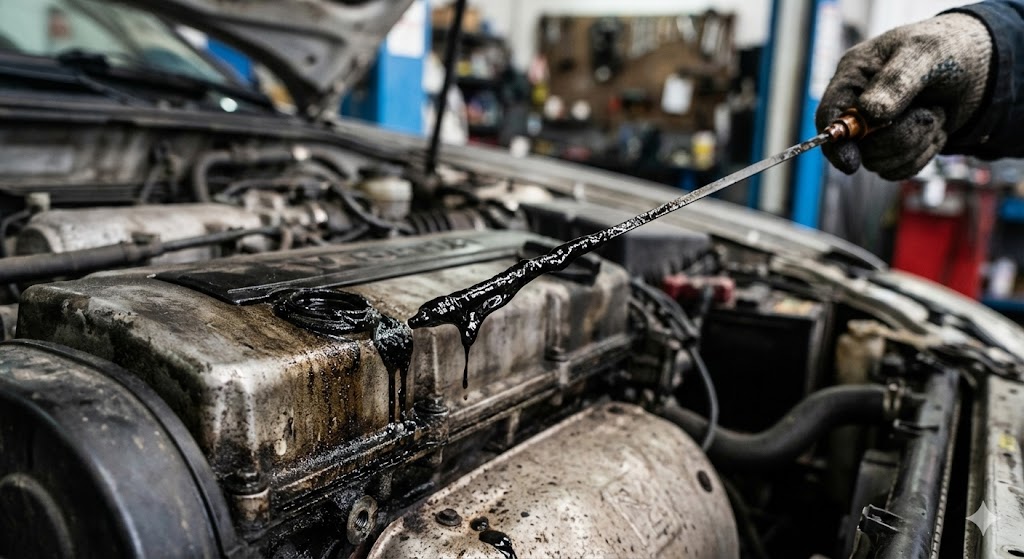
This is a common scenario: Someone buys a 2005 clunker with 250,000 miles on it for $1,500. The previous owner rarely changed the oil. The engine is running, but it’s packed with carbon deposits.
If you introduce highly aggressive modern synthetic oil into this environment, two things happen:
As mentioned above, it cleans out the sludge holding the gaskets together, causing massive leaks.
It can dislodge large chunks of sludge all at once, which can clog the oil pump pickup screen and starve the engine of oil entirely.
The Mechanic’s Advice: If it’s an old, neglected beater that burns a quart every 500 miles, stick to cheap, thicker conventional oil (like 10W-40 or 20W-50). You aren’t trying to save this engine; you’re just trying to limp it along.
4. The Special Case: Rotary Engines (Mazda RX-7/8)
The Wankel rotary engine found in Mazdas is a unique beast. By design, it injects small amounts of engine oil into the combustion chamber to lubricate the apex seals. It is designed to burn oil.
Conventional oil burns relatively cleanly. Many modern synthetics, however, leave behind ash and heavy carbon deposits when they burn. In a rotary, this carbon builds up on the delicate seals, causing loss of compression and engine failure.
While some specific synthetics are claimed to be rotary-safe, most rotary specialists still recommend sticking to high-quality conventional mineral oil to ensure clean combustion.
5. Final Verdict: The 2026 Rule of Thumb
If your car was built in the last 30 years and has been reasonably well maintained, it should be on synthetic oil. Period.
You should only avoid synthetic if:
Your car has a carburetor and a flat-tappet cam (Vintage).
Your engine is already on its deathbed, leaking and burning oil rapidly (The Beater).
You have a triangle spinning under the hood (Rotary).
For everyone else, pony up the extra cash for synthetic. It’s the right juice for the machine.
While these classic beauties and rotary engines crave conventional oil, they are the exception, not the rule in 2026.
Most modern vehicles are the exact opposite. If you have a newer car in your driveway and want to be sure, check out my complete guide on which cars actually need full synthetic oil to avoid making a costly mistake.


