
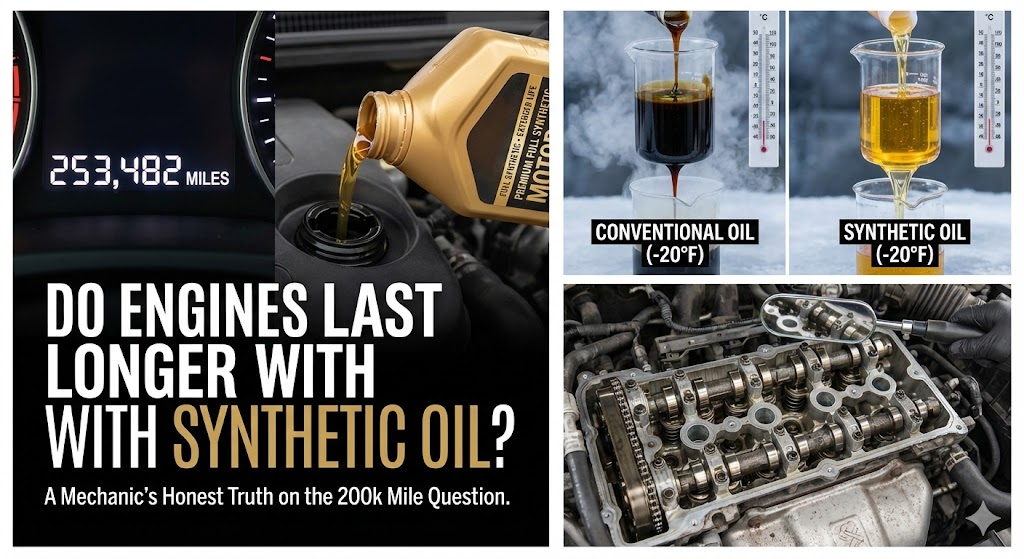
In 2026, cars are more expensive than ever. The days of buying a decent “beater” for $2,000 are gone. If you buy a new or slightly used car today, you need it to last. You aren’t aiming for 100,000 miles anymore; you are aiming for 250,000.
When you’re at the oil change counter facing a $100 bill for synthetic versus a $60 bill for conventional, you have to ask: “Is this extra money actually making my engine last longer, or am I just funding the shop owner’s boat?”
As a master technician who has torn down hundreds of engines—some dead at 80k miles, some purring at 300k—I can give you the definitive answer.
Yes. In modern vehicles, engines absolutely last significantly longer with synthetic oil. It is not marketing hype; it is mechanical reality. Here is why.
1. The “Cold Start” Killer (Where 75% of Wear Happens)
Engineers estimate that up to 75% of all engine wear occurs in the first few seconds after you turn the key, before the oil is fully circulating.
When an engine sits overnight, gravity pulls the oil down into the pan. At startup, the oil pump has to push that oil up to the top of the engine (camshafts, valves) instantly.
Conventional Oil: In cold weather (even just 30°F), conventional oil gets thick like cold honey. It struggles to pump. For those critical first seconds, metal parts are grinding on metal parts with barely any lubrication. That is permanent engine wear.
Synthetic Oil: It is chemically engineered to flow like water, even in freezing temperatures. It reaches critical components almost instantly on startup, drastically reducing that initial wear cycle.
Over 10 years of daily starts, this difference is massive.

WATCH: Synthetic vs. Conventional in Freezing Cold
Don’t take my word for it. Watch this incredible visual test by Project Farm showing how drastically different these oils behave when it gets cold. This video alone should convince you.
2. The Heat Factor: Saving Your Turbo
In 2026, almost every car—from a Honda CR-V to a Ford F-150—has a turbocharger to boost fuel economy. Turbos spin at over 200,000 RPM and get incredibly hot, sometimes glowing red.
The only thing keeping that spinning turbo bearing alive is a thin film of oil.
When you turn your car off, that heat “soaks” into the stagnant oil inside the turbo bearing.
Conventional oil literally fries. It cooks into hard carbon deposits (called “coking”) that clog the oil feed lines. A starved turbo fails catastrophically, often costing $3,000+ to replace.
Synthetic oil can withstand temperatures of 450°F+ without breaking down. It resists coking and keeps those vital turbo lines clear.
If you have a turbo, conventional oil is a death sentence for your engine’s longevity.
3. The Long Game: Preventing the “Sludge Death”
The enemy of longevity is sludge—a thick, black, tar-like substance that forms when oil breaks down due to heat and contaminants.
Think of sludge like cholesterol in your arteries. It slowly clogs the tiny oil passages designed to lubricate vital components like timing chain tensioners and variable valve timing (VVT) solenoids.
Modern engines have incredibly tight tolerances. A tiny bit of sludge can cause a VVT failure that triggers a Check Engine Light and a $2,000 repair bill.
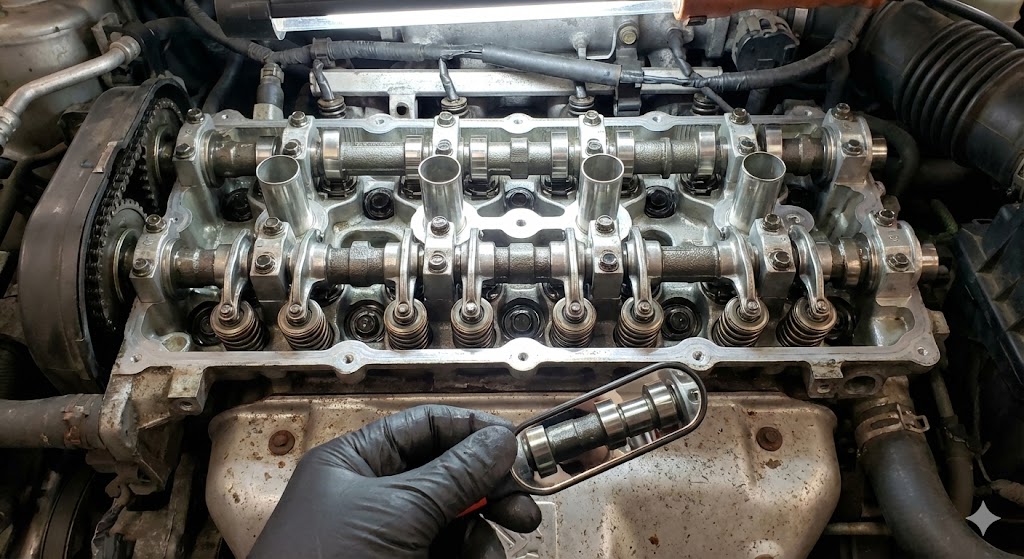
Synthetic oil is vastly more stable and contains superior detergent additives that keep soot and contaminants suspended, preventing them from sticking to metal surfaces. An engine run on synthetic for 200,000 miles is usually spotless inside; one run on cheap oil is often packed with sludge.
4. The Verdict: It’s Cheaper in the Long Run
If you lease your car and plan to return it in 3 years, you might not care about engine longevity.
But if you plan to keep your car once the warranty expires, the extra $40 per oil change for full synthetic is the best investment you can make.
It protects at start-up, it survives the extreme heat of modern turbos, and it keeps the engine clean internally. Yes, engines last longer with synthetic oil. It is the difference between an engine that is tired at 120k miles and one that is just getting broken in.


