
In 2026, synthetic oil is incredible stuff. It handles higher heat, lasts longer, and protects better than the oil your grandpa used.
Because it lasts so long, many drivers get complacent. They see the high price tag—I’ve explained exactly why a full synthetic oil change costs so much these days—and they try to stretch the interval just a few thousand miles more to save money.
But even the best synthetic oil eventually breaks down. The additive packages get used up, and it gets loaded with soot and contaminants. If you wait until your engine is screaming for help, damage has already started.
As a mechanic, I prefer you change your oil before symptoms appear. But if you want to know what your car is trying to tell you, here are the critical signs that your synthetic oil is past its prime.
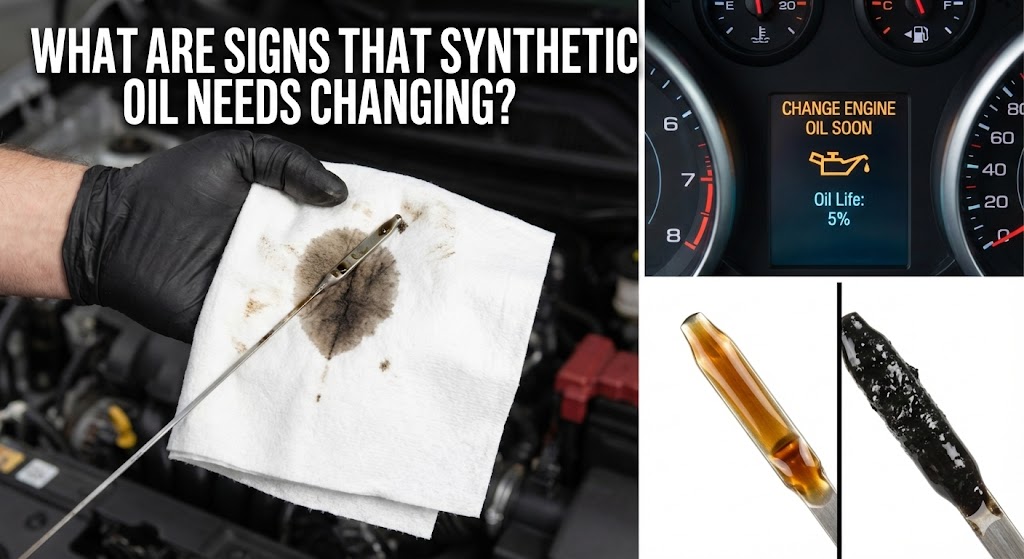
1. The Dashboard Nanny: Your Oil Life Monitor
In almost every car built in the last ten years, this is your primary sign. Modern cars use sophisticated algorithms to calculate oil life based on how you drive—short trips, cold weather, and towing all make the percentage drop faster.
When your dashboard says “Oil Life 15%” or “Change Oil Soon,” believe it.
Don’t ignore it because you only drove 5,000 miles. If you do lots of city driving, your oil wears out faster than highway miles. For a deeper dive into mileage versus time, read my guide on how often you should actually change full synthetic oil.

2. The Dipstick Test: Color and Texture
Even in 2026, the old-school dipstick is still the best way to see the actual condition of your oil. Pull it out, wipe it clean, dip it again, and look at the oil on the towel.
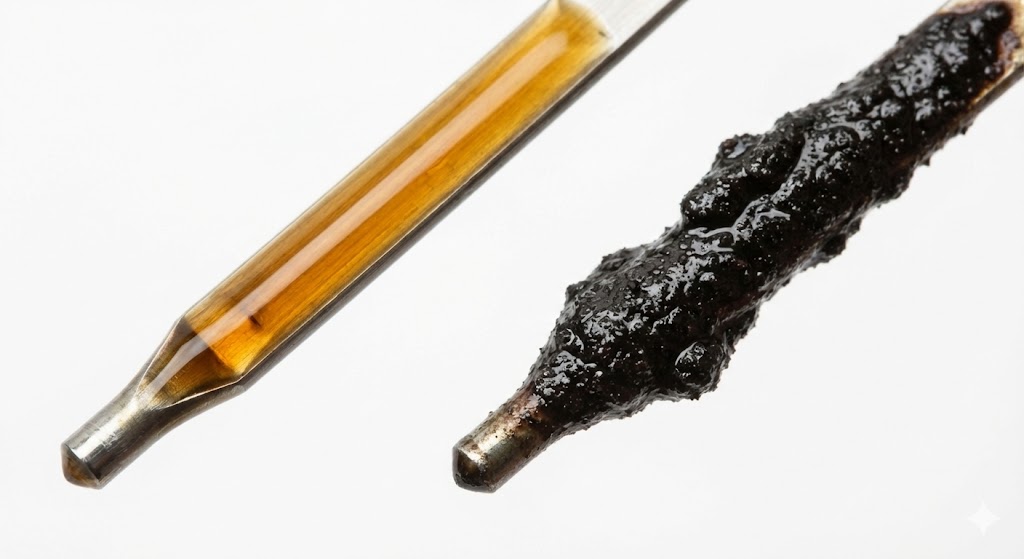
Amber/Golden: Like honey. This is new or good oil.
Dark Brown: This is normal used oil. Synthetic oil darkens quickly as it cleans soot inside the engine. Dark color alone doesn’t mean it’s bad.
Black and Gritty: DANGER SIGN. If the oil feels gritty between your fingers, that’s metal shavings or hard carbon sludge. Change it immediately.
Milky or Frothy Brown: STOP DRIVING. This looks like a chocolate milkshake. It means coolant is leaking into your oil, usually from a blown head gasket.
3. Increased Engine Noise at Startup
Synthetic oil is designed to leave a thin film on parts even when the engine is off. As the oil ages and its additives break down, that film weakens.
If you notice that your engine sounds extra clattery or “ticky” for the first few seconds after a cold start in the morning, it could mean your old oil is draining away too quickly and not protecting the valve train at startup.
WATCH: How to Properly Check Your Oil Condition
Seeing is believing. This video shows you exactly what good, bad, and terribly ugly oil looks like on a dipstick so you know what to look for.
4. Sluggish Performance and Check Engine Lights
As synthetic oil gets extremely old, it can start to thicken up and form sludge. Modern engines use oil pressure to power their Variable Valve Timing (VVT) systems.
If the oil is too thick with sludge to flow through the tiny screens in the VVT solenoids, your engine timing will be off. You might feel the car hesitate when you accelerate, and it will eventually trigger a Check Engine Light with codes related to “Camshaft Position Timing.”
This symptom is very similar to what happens when you use the wrong viscosity oil, as I explained in my article about putting 5W-30 in a 5W-20 engine. Old, thickened oil acts like the wrong oil.
5. Dave’s Verdict: Don’t Wait for Signs
If you are waiting for your engine to make noise or feel sluggish before you change the oil, you are waiting too long. Those are signs of wear happening right now.
The best sign that your synthetic oil needs changing is your odometer or your car’s oil life monitor telling you it’s time. Use the physical signs—the dipstick check and the sounds—as a backup warning system, not your primary schedule.


