
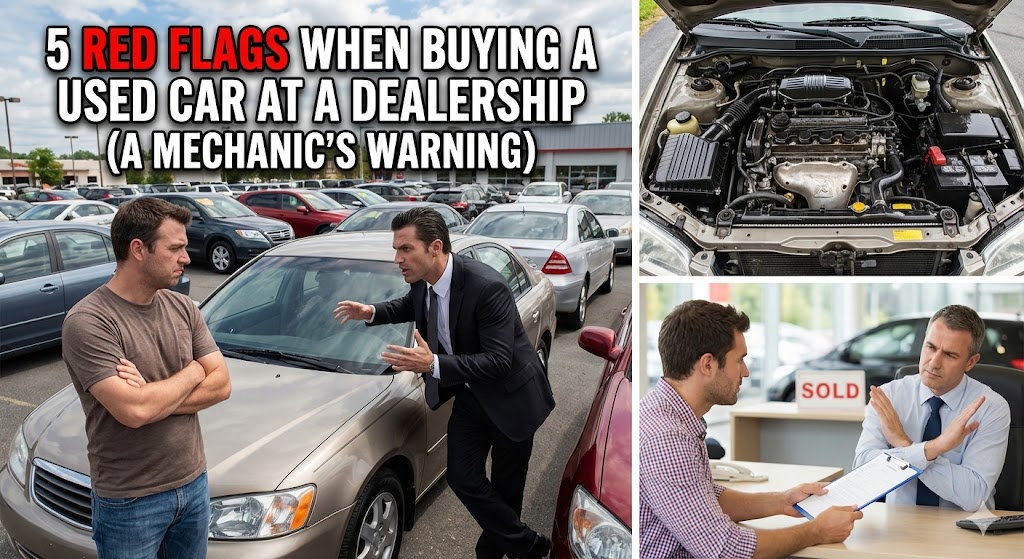
In 2026, buying a used car is terrifying. Prices are still astronomically high, and inventory is tight. You already know why basic maintenance like oil changes are so expensive now, so the last thing you need is to buy a car that needs a new engine next month.
As a mechanic, I see the heartbreaking aftermath. A customer brings in a “new to them” car they just bought yesterday, only for me to tell them it has a blown head gasket that was temporarily patched up to get it off the lot.
Dealerships are in the business of selling cars, not protecting your wallet. While many are honest, plenty use tactics designed to distract you from a car’s true condition.
Here is the mechanic’s honest truth about the absolute biggest “red flags” you must look for when stepping onto a used car lot in 2026.
1. The “Today Only” Pressure Cooker
If a salesperson tells you another buyer is “on their way right now to look at this exact car,” or that the price is only good until they close tonight, that is a massive red flag.
Why it’s bad: High-pressure tactics are designed to bypass your logical brain and force an emotional decision. They don’t want you to think about the purchase overnight.
In 2026, with digital pricing, “today only” deals are almost always a lie. A reputable dealer knows a good car will sell itself without threats.
2. Hiding the Digital History Report
In this day and age, vehicle history reports (like Carfax or AutoCheck) are standard. A reputable dealership will have it ready to show you on an iPad before you even ask, or link it directly on their website advertisement.
The Red Flag: If they say their “system is down,” or they “can’t find it right now,” or they try to just tell you the history instead of showing you the document, walk away. They are hiding an accident, flood damage, or a branded title.
3. The Mechanic’s Secret: The “Freshly Washed Engine” Trick
When you pop the hood of a 10-year-old used car, it should be a little dusty.
The Red Flag: If the engine bay is sparkling clean, drenched in shiny silicone tire shine, and smells like degreaser, be extremely suspicious.
Why it’s bad: Dealerships pressure-wash engines to wash away evidence of active oil leaks or coolant leaks. They are trying to make it look new so you don’t see the grime that indicates a failing gasket. If you buy that shiny engine, within a week the shine will burn off, and you’ll be seeing the actual signs of bad engine oil leaking onto your driveway.

WATCH: How to Spot Hidden Damage on a Used Car
Before you step onto the lot, arm yourself with knowledge. This video shows some classic dealer tricks to hide bodywork and mechanical issues that an untrained eye would miss.
4. Refusing an Independent Pre-Purchase Inspection (PPI)
This is the ultimate deal-breaker. Before you sign anything, you tell the dealer: “I want to take this car to my own mechanic (like Dave) for a Pre-Purchase Inspection.”
The massive red flag: If they say no.
They might give excuses like “their insurance doesn’t cover it off the lot,” or “they already inspected it themselves.” Do not accept this.
A reputable dealer selling a good car has nothing to hide and will happily let you get it inspected (usually at your expense). If they refuse, it means they know my team will find something major wrong with it.
5. Dave’s Verdict: Your Greatest Power

When you are at a dealership, remember this: Your greatest power is the ability to stand up and walk away.
If you see any of these red flags, use that power. Don’t let the excitement of a shiny new car cloud your judgment.
And once you do find a good, honest used car, protect your investment. Don’t cheap out on maintenance. We know that synthetic oil is really worth the extra cost to keep that engine running for years to come.


