
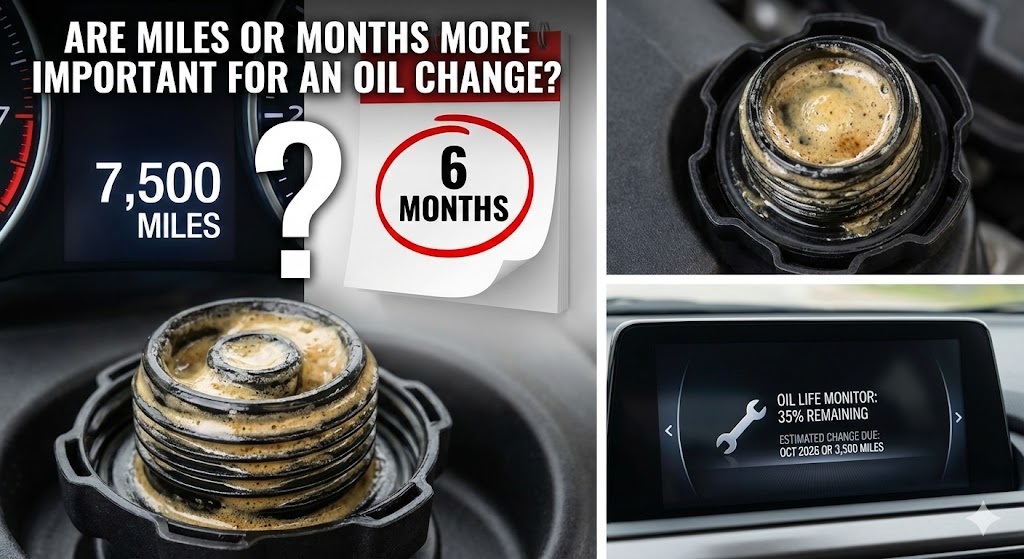
It’s the classic debate stuck to the corner of your windshield: “5,000 Miles OR 6 Months.”
In 2026, with modern synthetic oils easily lasting 10,000 miles, many drivers look at that sticker and get confused. You might think: “I only drove 3,000 miles in the last six months because I work from home now. Surely, I don’t need to spend $120 on an oil change yet?”
I get it. Knowing how expensive a full synthetic oil change can be, nobody wants to do it sooner than necessary.
But here is the mechanic’s honest truth: The “or months” part isn’t a suggestion. It’s a deadline. For many modern drivers, time is actually the bigger enemy of their engine than mileage.
Here is why your oil “expires” even if your car is just sitting in the driveway.
1. The Case for MILES: The Highway Warrior
If you drive 25,000 miles a year, mostly on the highway, then miles are your primary concern.
Miles represent physical wear. Every revolution of your engine shears the long oil molecules, and the intense heat of combustion slowly breaks down the chemical additives. Modern full synthetic oil is incredibly resilient against this type of wear, which is why you see intervals of 10,000 miles or more.
For high-mileage drivers, following the mileage recommendation in your owner’s manual is usually sufficient. For a deeper dive into specific intervals, check out my article on how often you should actually change full synthetic oil.
2. The Case for MONTHS: The Hidden Enemy of Short Trips
This is where most people get into trouble in 2026. If you work from home, only drive to the grocery store, or have a “weekend car,” months are far more important than miles.
Why? Condensation and Contamination.
An engine needs to run for at least 15-20 minutes at full operating temperature to boil off the water vapor that naturally condenses inside the block.
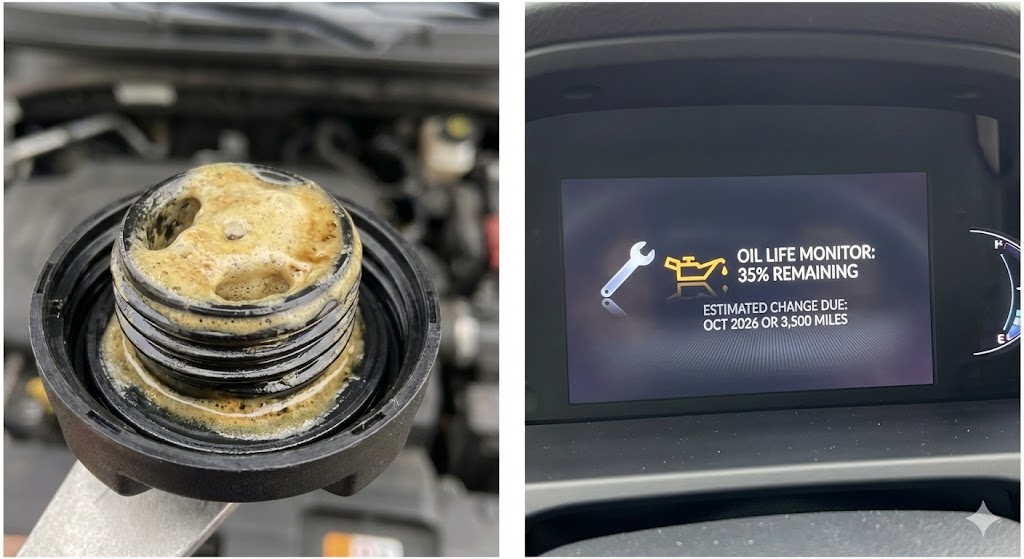
If you only take 5-minute trips, that water never boils off. It mixes with the oil, forms sludge, and creates acids that corrode your engine bearings while the car sits parked. Unburned fuel also seeps into the oil on cold starts, thinning it out.
If you don’t drive much, your oil isn’t wearing out from heat; it’s being contaminated to death. This buildup leads to the exact symptoms I describe in my guide on signs that synthetic oil needs changing.
WATCH: Why Oil “Expires” Over Time
Still skeptical that oil goes bad just sitting there? This video explains the chemical processes of oxidation and acid buildup that occur over time, even if the car isn’t driven a single mile.
3. The 2026 Solution: Your Oil Life Monitor Smart System
Thankfully, in 2026, you don’t need to guess. The “Oil Life Monitor” on your dashboard is smarter than you think.
It doesn’t just count miles. Its computer algorithm tracks:
Engine temperatures
Number of cold starts
Trip duration
Idle time
Calendar time
If you only drive 2,000 miles in a year, but they are all 1-mile trips in freezing weather, your oil life monitor might tell you to change the oil in 5 months. Trust it. It knows your driving habits better than you do.
4. Dave’s Verdict: Whichever Comes First
The rule is simple: Follow whichever limit you hit first.
Drive a lot? Change it when you hit the mileage limit (e.g., 10,000 miles), even if it’s only been 4 months.
Drive a little? Change it when you hit the time limit (e.g., 12 months), even if you only drove 1,500 miles.
Don’t try to save money by ignoring the calendar. Changing your oil once a year is cheap insurance to ensure your engine lasts longer with synthetic oil. Letting acidic, watery oil sit in your expensive engine is a gamble you will lose.


