
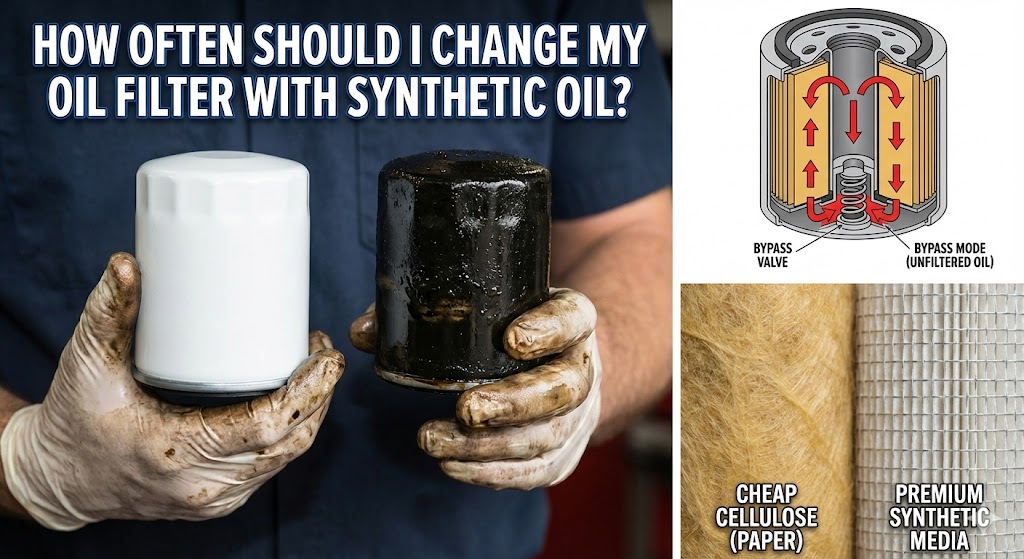
It’s a question I hear constantly, usually whispered by a customer trying to save $15 on their bill.
“Hey Dave, since I’m using that expensive 15,000-mile synthetic oil, can I just skip the filter this time? My dad used to say change the filter every other oil change.”
I understand the temptation. We all know how much a full synthetic oil change costs these days. Cutting out the filter seems like an easy way to lower the price.
Here is the mechanic’s honest truth for 2026: Trying to save money by skipping the oil filter is the most expensive mistake you can make.
Your dad’s advice was fine for 1985. Today, with modern synthetic oil intervals, it’s a recipe for disaster. Here is why.
1. The “Every Other Time” Myth is Dead
Decades ago, we changed conventional oil every 3,000 miles. Back then, filters could easily handle 6,000 miles of driving, so changing the filter “every other time” was acceptable advice.
In 2026, that advice is obsolete.
Today, we know you should change full synthetic oil much less frequently—often at 10,000 or even 15,000 miles.
If you leave an oil filter on for two of those cycles, you are asking a small paper cartridge to filter contaminants for 20,000 to 30,000 miles. It cannot do it. The filter is now the weakest link in the chain.
2. The Hidden Danger: Filter “Bypass Mode”
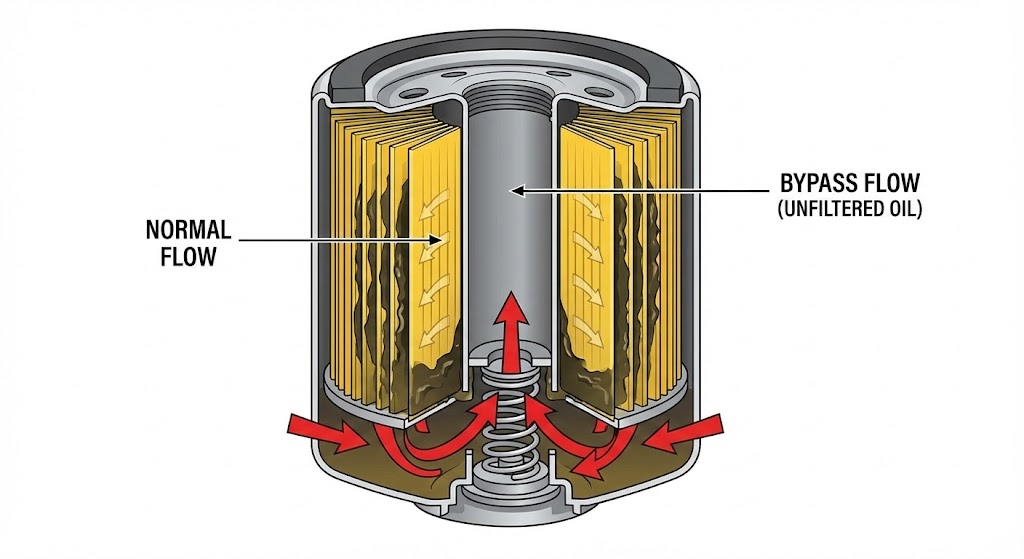
This is the part most drivers don’t understand. An oil filter has a safety mechanism built-in called a bypass valve.
Its job is simple: If the filter media gets completely clogged with sludge and metal particles, the valve opens up. This allows oil to flow around the filter and back into the engine.
Why? Because dirty oil is better than no oil at all. If the filter gets blocked and there is no bypass, your engine starves of oil and seizes instantly.
But here is the catch: When your filter goes into bypass mode, your engine is running on completely unfiltered oil. All those abrasive particles are being pumped right into your bearings. This is exactly what causes the severe symptoms I describe in my guide on signs of bad engine oil.
If you skip a filter change with synthetic oil, you are almost certainly driving around in bypass mode for months.
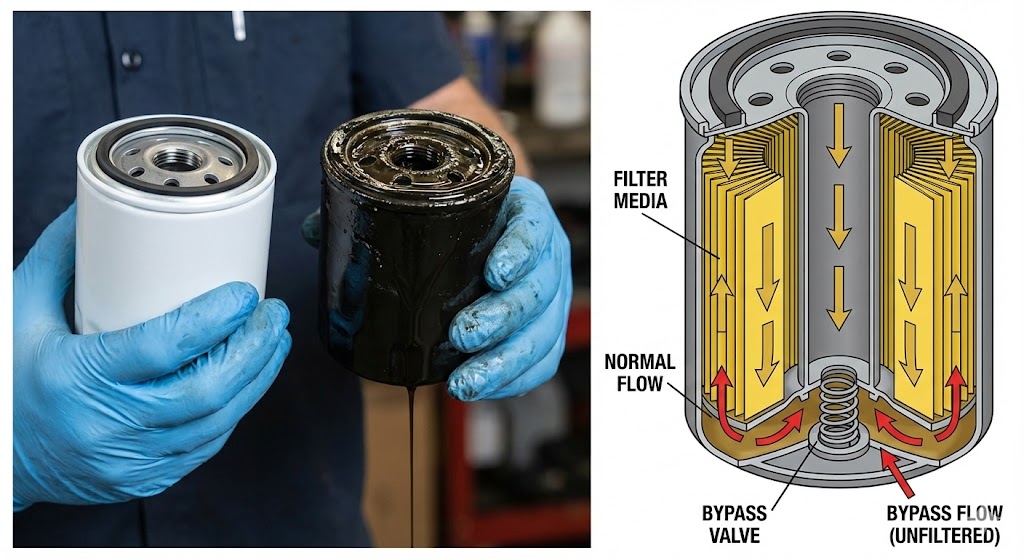
WATCH: What Happens Inside an Old Filter?
Don’t believe that a filter gets that dirty? This video cuts open a used oil filter to show the incredible amount of sludge and metal particulates it traps, proving why you can’t stretch its life.
3. The 2026 Problem: 15k Mile Oil vs. 5k Mile Filters
Here is another issue. You buy the premium “15,000 Mile Annual Protection” synthetic oil. You pay top dollar for it because you know synthetic oil is worth the extra cost for engine longevity.
But then, the quick-lube shop spins on their cheapest, generic $4 orange oil filter.
That cheap filter is likely made of basic cellulose (paper) and is only rated for about 5,000 miles.
You now have a massive mismatch. Your oil is good for 15k, but your filter is done at 5k. For the last 10,000 miles of your interval, that cheap filter is clogged and bypassing dirty oil. You wasted your money on expensive oil because the filter couldn’t keep up.
If you use extended-life synthetic oil, you must use an extended-life synthetic media filter (usually made of glass fibers, not paper) designed for the same mileage.
4. Dave’s Verdict: The Only Rule You Need
Forget what your dad told you in 1985. In 2026, the rule is simple:
Always change the oil filter every single time you change the oil.
Never skip the filter. The risk of running unfiltered oil through your engine is not worth saving $15.
Match the filter to the oil. If you use 10,000-mile synthetic oil, ensure you are buying a premium filter rated for 10,000 miles.
A quality oil filter is the cheapest insurance policy for your car’s engine. Don’t cancel the policy just to save pennies.


