
In 2026, cars are incredibly reliable. We drive them for 10,000 miles between services and rarely pop the hood. But this complacency is dangerous.
Many drivers delay maintenance because they know how expensive a full synthetic oil change can actually be. They wait for the car to “feel” wrong before spending the money.
Here is the brutal truth from a mechanic: If you are waiting for physical symptoms of bad oil—like noise, smoke, or sluggishness—damage to your engine has likely already begun.
Modern synthetic oil is designed to protect invisibly. When it goes “bad,” it stops protecting long before the engine starts clunking. However, if you want to know what to look for, here are the critical signs that your engine oil has turned from a lubricant into a liability.
1. The Golden Rule: Don’t Wait for Symptoms
Before we look at the physical signs, remember this: The primary “sign” that your oil is bad is your odometer or calendar telling you it’s time to change it.
Oil additive packages break down chemically over time and mileage. You cannot see this chemical breakdown with the naked eye. Relying on your car’s Oil Life Monitor is far safer than waiting for a noise. Understand whether miles or months are more important for your driving style and stick to that schedule.
2. Visual Signs on the Dipstick (Texture over Color)
Even in 2026, the dipstick is your best diagnostic tool. But you need to know what you’re looking for.
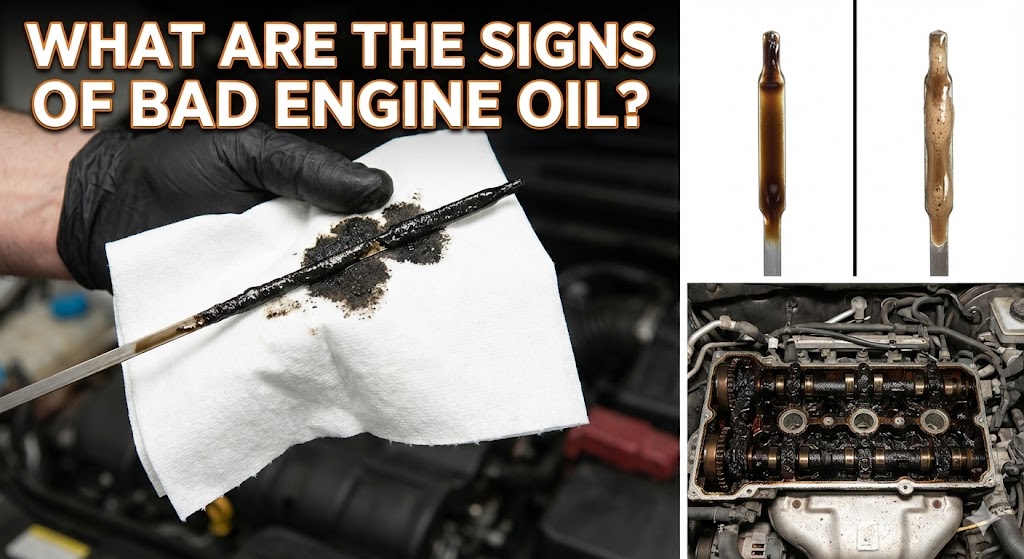
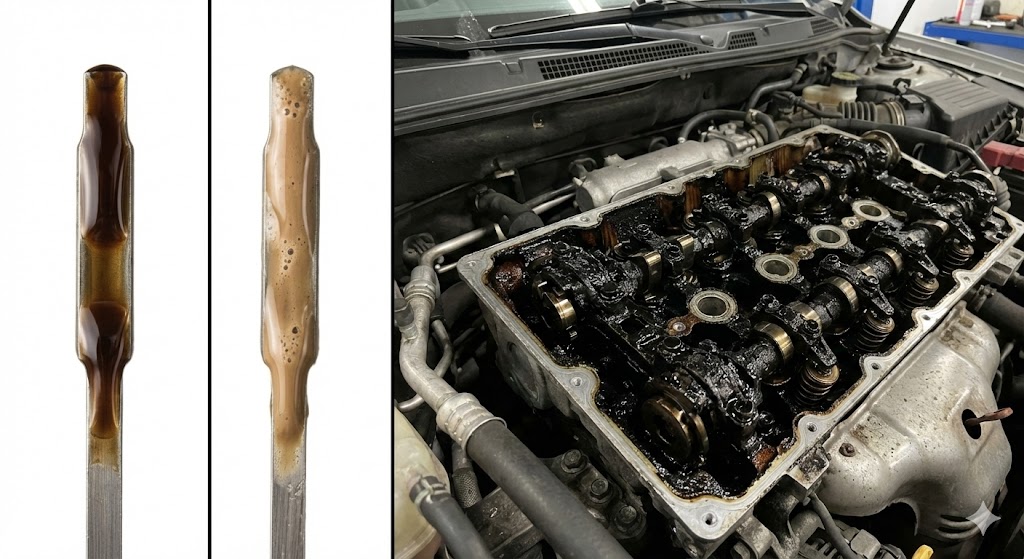
The “Dark Color” Myth: Many people think dark oil is bad. This is false. Modern synthetic oils contain aggressive detergents designed to clean soot inside the engine. The oil turning dark brown or black quickly means it is doing its job.
The Real Danger: Gritty Texture: Rub a little oil from the dipstick between your thumb and forefinger. It should feel smooth and slippery. If you feel grit, particles, or roughness, that is metal shavings or hard carbon deposits. This is a sign of severe wear.
The “Forbidden Milkshake”: If the oil looks like a frothy, milky brown chocolate milkshake, stop driving immediately. This means engine coolant has mixed with the oil, usually indicating a blown head gasket.
For more on interpreting the dipstick, read my detailed guide on signs that synthetic oil needs changing.
WATCH: How to Properly Check Your Oil Condition
Seeing seeing is believing. This excellent video by ChrisFix demonstrates exactly what to look for on a dipstick, including the dangerous “milky” look that spells disaster.
3. The Sounds of Starvation: Ticking and Clatter
Oil isn’t just a lubricant; it’s a hydraulic fluid that pumps up valve lifters and timing chain tensioners.
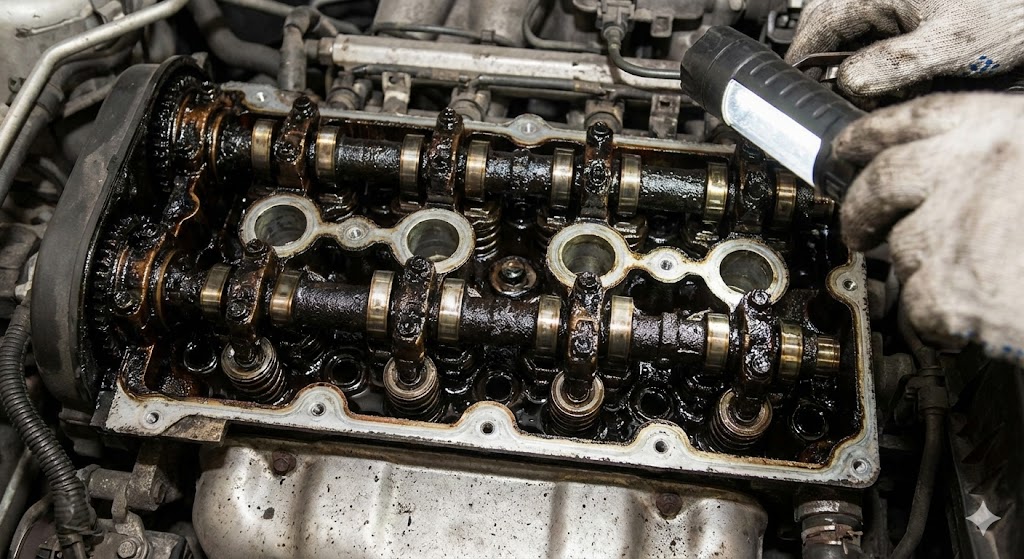
When oil gets extremely old, it oxidizes and thickens into sludge. On a cold morning, this thick goo cannot pump to the top of the engine fast enough.
The Sign: A loud metallic ticking or clattering noise that lasts for several seconds after starting the car, then fades away as the oil finally warms up and thins out. This is the sound of metal parts running dry.
4. Performance Issues: Sluggish VVT and Check Engine Lights
Almost every modern car uses Variable Valve Timing (VVT). This system uses oil pressure through tiny screens to advance or retard the engine timing for power and efficiency.
If your oil is full of sludge, it clogs these tiny screens. The VVT system fails to react quickly.
The Sign: You step on the gas to merge onto the highway, and the car feels sluggish or hesitates. Eventually, this will trigger a “Check Engine” light for timing codes. The symptoms of thickened, old oil are very similar to what happens if you put the wrong viscosity oil in your car—it just can’t flow where it needs to go.
5. Dave’s Verdict: Proactive vs. Reactive
If your car is showing the signs listed above—gritty texture, ticking noises, or sluggish performance—you aren’t just due for an oil change; you are likely already doing damage.
Bad oil is like high blood pressure; it’s a silent killer until it causes a massive event. Don’t wait for the signs. We know definitively that engines last longer with synthetic oil changed on time. It’s the cheapest insurance you can buy.


