
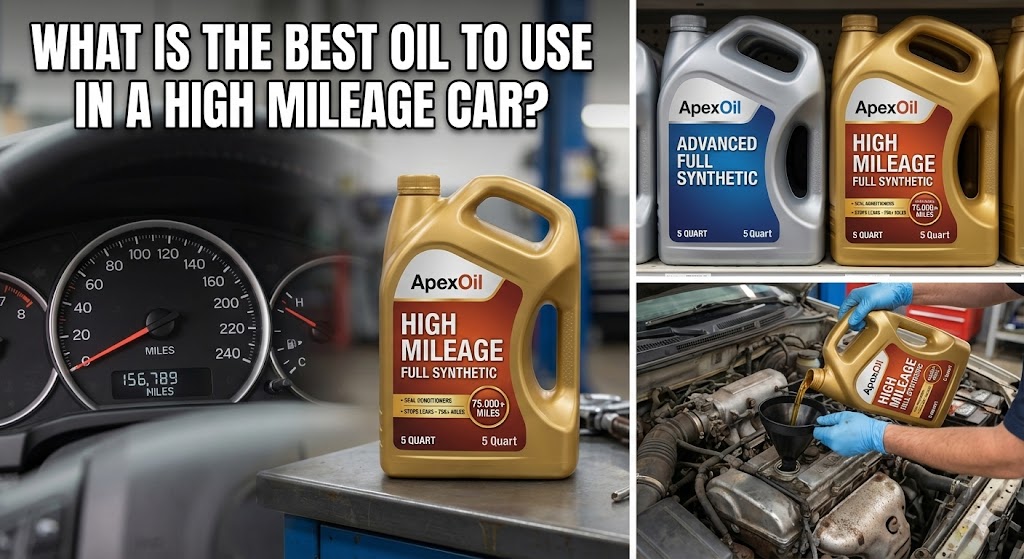
Your trusty car just crossed the 100,000-mile mark. It’s paid off, it runs well, and you want to keep it that way for another five years.
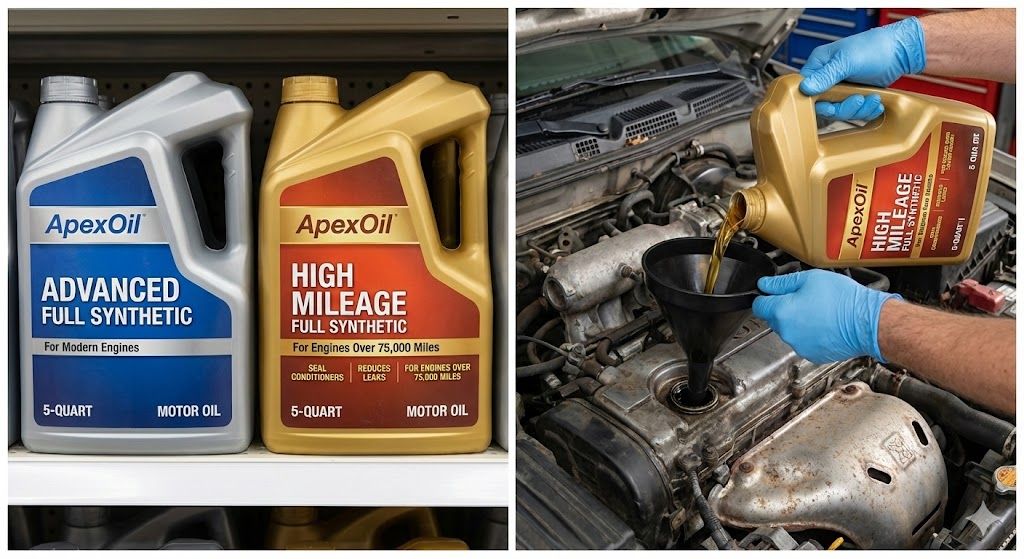
You walk into the auto parts store and face a wall of options. You’ve always used standard oil, but now those gold bottles labeled “High Mileage” are staring at you.
Is “High Mileage” oil just a marketing gimmick to charge you $5 more per jug? Or does an older engine actually need different chemistry?
In 2026, automotive engineering has changed. We know definitively that engines last longer with synthetic oil. But once they get old, they need specific help.
Here is the mechanic’s honest truth about the best oil for your aging engine and why it’s not snake oil.
1. What Does “High Mileage” Actually Mean in 2026?
First, let’s define the threshold. In the industry, most oil manufacturers define “High Mileage” as any vehicle with over 75,000 miles (about 120,000 km) on the odometer.
Why 75k? Because that is historically the point where internal rubber seals and gaskets—things like valve stem seals, rear main seals, and valve cover gaskets—start to shrink, harden, and lose their flexibility due to years of heat cycles.
Many people wonder when they should stop using regular full synthetic oil because they fear leaks. 75,000 miles is the recommended switch point, not to downgrade, but to switch sideways to a specialized product.
2. The Secret Sauce: Why High Mileage Oil Is Different
It’s not just marketing fluff. High Mileage oils contain a different additive package designed specifically to combat the physical realities of an aging engine.
Here are the key differences:
Seal Conditioners (Swelling Agents): This is the big one. These are chemicals (like esters) that are absorbed by old, dried-out rubber seals. They cause the seals to slightly swell up and become pliable again. This can stop minor leaks and reduce oil consumption without mechanics needing to tear apart the engine.
Boosted Detergents: Older engines tend to have more sludge buildup from years of operation. HM oils have stronger cleaning agents to slowly dissolve these deposits, preventing the dreaded signs of bad engine oil like clogged VVT screens.
Extra Anti-Wear Additives: As bearings wear down, tolerances get looser. HM oils often contain slightly higher levels of zinc (ZDDP) or molybdenum to provide a tougher sacrificial barrier between metal parts that are no longer fitting together perfectly.
WATCH: Do High Mileage Oils Actually Work?
Are seal conditioners real science or snake oil? This video provides a great breakdown of what these chemicals actually do to old rubber gaskets to stop leaks.
3. Synthetic vs. Conventional High Mileage: Which is Best?
You will see both “High Mileage Conventional” (or blend) and “High Mileage Full Synthetic” on the shelf. Which should you choose?
Always choose the High Mileage Full Synthetic.
Just because your engine is old doesn’t mean it deserves worse oil. In fact, older engines run hotter and need more protection.
Conventional High Mileage: Solves the seal issue, but breaks down faster under heat and flows poorly in cold.
Synthetic High Mileage: Gives you the best of both worlds—superior temperature protection and longevity of a synthetic base, plus the seal conditioners your old engine needs.
Even for an older car, synthetic oil is really worth the extra cost compared to replacing a rear main seal.
Exception: If your car is a “beater” that burns a quart of oil every week and is on its last legs, save your money and use the cheapest stuff you can find. You can switch back and forth without issue in a terminal engine.
4. Dave’s Verdict: The Gold Standard for Old Cars
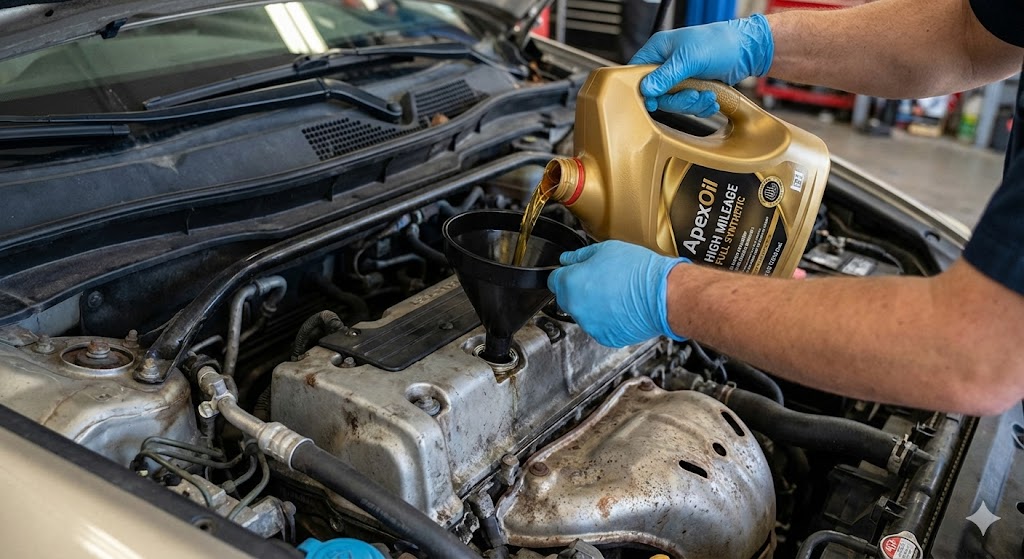
If your car has over 75,000 miles and you plan on keeping it, switch to a High Mileage Full Synthetic at your next oil change.
It is the best oil you can use. It provides the superior protection of synthetic base stocks while proactively treating the aging rubber seals that are the most common failure point on high-mileage engines. It’s cheap insurance to help your car reach 200,000 miles and beyond.


