
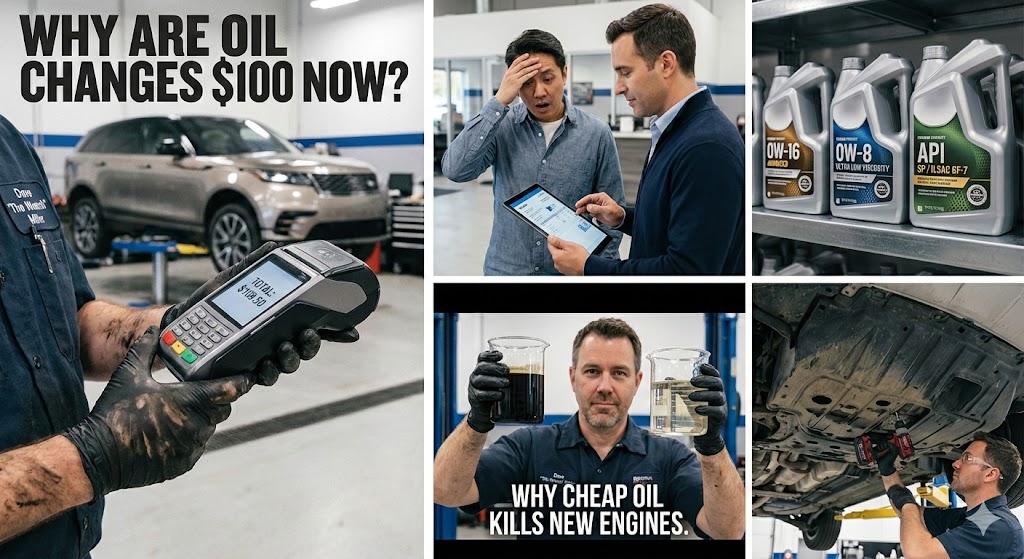
I stand at the service counter every day and see the same look. It’s the “sticker shock” stare. You hand over your keys for a routine oil change on your modern SUV, and when you come back to pick it up, the bill is $109.50 before tax.
“Dave,” they ask me, eyes wide, “I remember when this used to cost thirty bucks. Are you guys just gouging me?”
Here is the honest truth, from someone who has been under lifts for 25 years: The $29.99 oil change is dead. It’s buried right next to the payphone and cheap gas.
In 2026, a $100 oil change isn’t a rip-off; it’s the new reality of maintaining sophisticated modern machinery. If you’re paying significantly less, you should be worried about what isn’t being done.
Here is a breakdown of why the price has tripled, and where your money actually goes.
The “Big Three” Cost Drivers
There isn’t one single villain here. It’s a combination of three major economic and technological shifts that have hit the auto industry hard over the last few years.
1. The Oil Itself Has Changed (It’s “Liquid Engineering” Now)
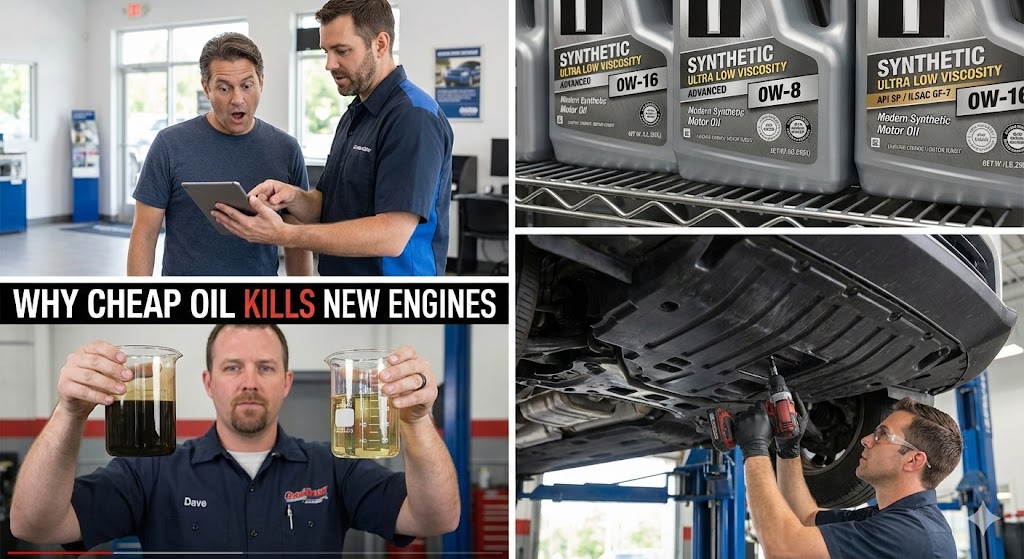
Remember the thick 10W-40 your dad put in his old truck? That stuff was simple. Today’s engines are incredibly tight-tolerance machines designed to meet strict federal fuel economy standards. They require incredibly thin, highly engineered synthetic fluids—like 0W-16 or even 0W-8 viscosity.
These aren’t just lubricants; they are complex chemical components packed with expensive additives designed to prevent low-speed pre-ignition (LSPI) in turbocharged engines and protect delicate timing chains.
The Cost Reality: A quart of old-school conventional oil used to cost a shop $2. A quart of GF-7 certified, full synthetic 0W-16 costs us nearly $9 wholesale. Your car needs 5 to 7 quarts. That’s $45-$65 just for the fluid before we even touch the car.
2. The Labor Shortage and Technician Pay
This is the elephant in the room. Finding skilled labor in the trades has been a crisis for a decade. To get a competent technician who knows how to properly lift a 5,000-lb hybrid without damaging the high-voltage battery pack, and who won’t strip your oil pan drain plug, we have to pay them a living wage.
In 2026, you cannot hire a reliable technician for minimum wage. Wages have risen significantly to attract talent, and those costs are passed directly to the service hour.
3. Overhead and Environmental Fees
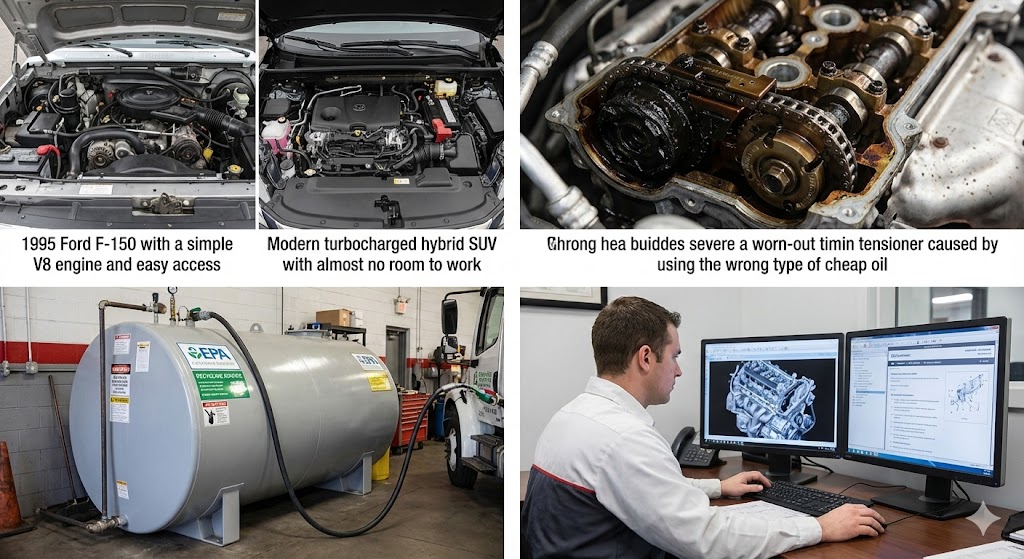
Our rent has gone up. Our utility bills have gone up. The cost of the diagnostic tablets we need just to reset your car’s maintenance light has skyrocketed. Furthermore, environmental regulations regarding waste oil disposal are stricter than ever. We pay significant fees to EPA-certified haulers just to take the old oil away.
WATCH: Why Cheap Oil Kills Modern Engines
If you think you can save money by using cheaper, older-spec oil in a modern car, watch this breakdown by The Motor Oil Geek on why that’s a multi-thousand-dollar mistake waiting to happen.
The “Hidden” Labor of Modern Vehicles
“But it only takes 10 minutes to change oil!”
That was true in 1995. It is rarely true today. Modern car design has made a simple procedure much more complicated to perform correctly.
The Skid Plate Struggle
To improve aerodynamics for fuel economy, almost every modern car has massive plastic or metal undertrays (skid plates) covering the entire bottom of the engine.
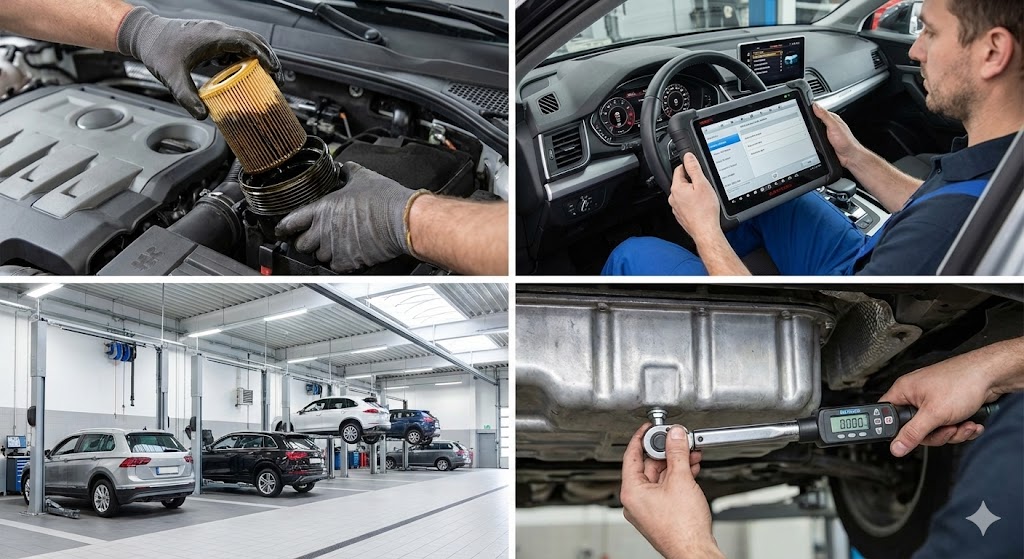
We often have to remove 15 to 20 rusted screws or plastic clips just to see the oil filter. This adds 15-20 minutes of labor to the job. If those clips break (and they always do in winter), we have to replace them.
The Cartridge Filter and Digital Reset
Many manufacturers moved away from the easy spin-on metal filters to “cartridge” style filters hidden inside plastic housings. These are messier to change and require specific torque specs so the plastic doesn’t crack.
Furthermore, after the physical work is done, we have to hook up a diagnostic scanner to reset your car’s oil life monitor. On some European cars, this alone is a 10-minute digital process.
WATCH: The “Simple” Filter Change That Isn’t Simple
See the difference in actual labor and complexity with modern cartridge filters, explained by The Car Care Nut.
The Bottom Line
I know it hurts to swipe that card for $100. I really do.
But you have to view an oil change differently now. It’s not just a fluid top-up; it’s the cheapest insurance policy you can buy for an engine that might cost $8,000 to replace if it fails.
When you pay $100 at a reputable independent shop, you are paying for the correct high-spec fluid, a technician who knows what they are doing, and the peace of mind that your warranty remains valid.


